
Flows before screens
We map what someone is trying to achieve and the path there, then design the screens that path needs. Designing screens first is how products end up with twelve of them and no journey.
Design is the cheapest place to be wrong. We turn an idea into flows, screens, and a clickable prototype you can put in front of real users, while changing your mind still costs an afternoon rather than a sprint.
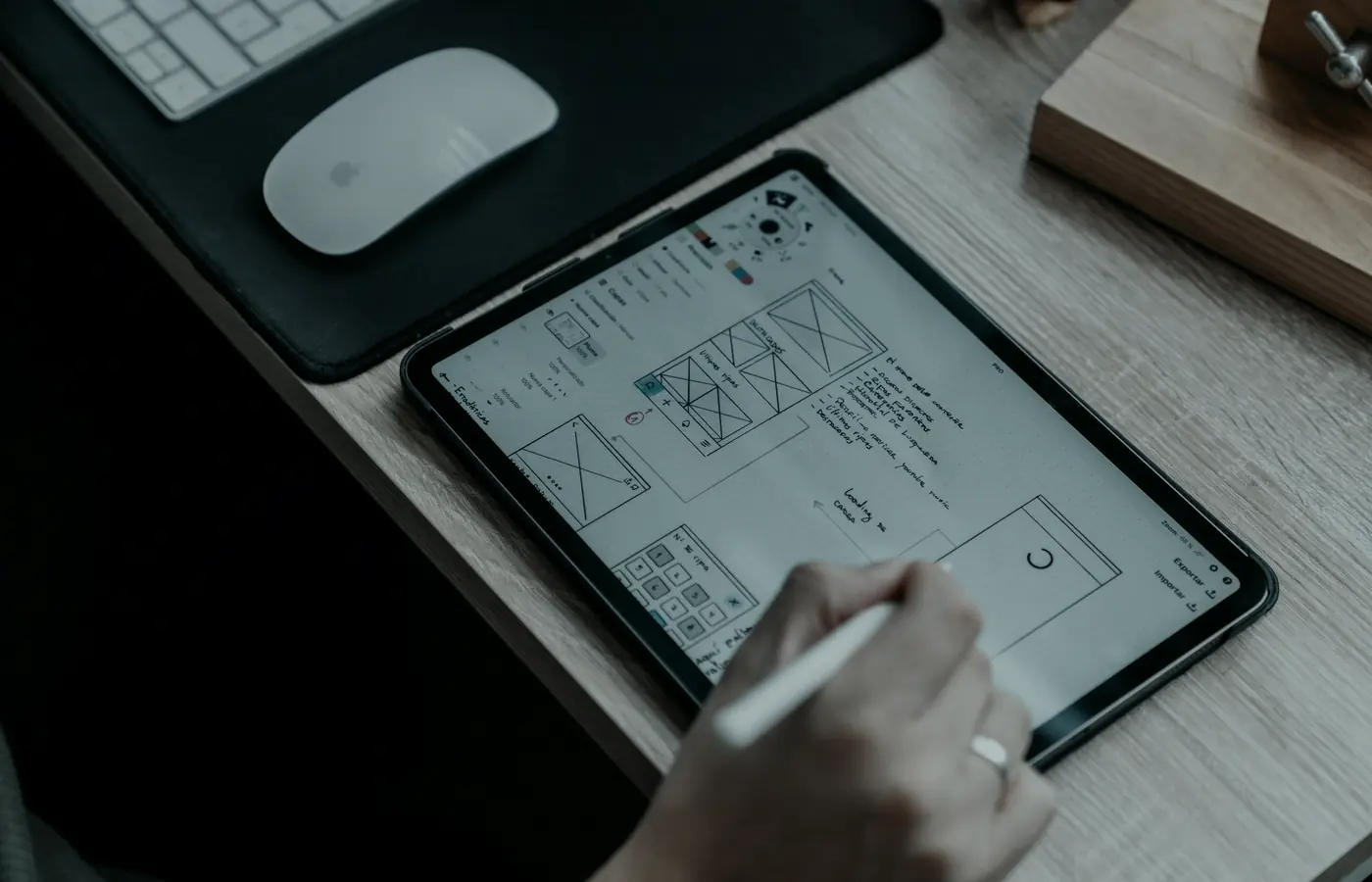
Changing a screen in Figma costs an hour. Changing it after it is built, tested, integrated, and shipped costs a fortnight and a difficult conversation. Yet most projects rush design to reach development sooner, which reliably produces the opposite of speed.
The other failure is design that looks beautiful and cannot be built as drawn: no empty states, no error states, no idea what happens on a narrow screen or when a name is forty characters long. Engineers then invent those answers under time pressure, and the product ends up designed by accident.
We design the whole system, including the unglamorous states, and hand over something a developer can build without a single round of guessing.
We map what someone is trying to achieve and the path there, then design the screens that path needs. Designing screens first is how products end up with twelve of them and no journey.
Clickable and realistic enough to put in front of real users, so you learn where they hesitate before that hesitation is expensive.
Empty, loading, error, offline, permission-denied, and too-much-content. These are most of the real experience and almost none of the average design file.
Contrast, focus order, keyboard operation, and screen-reader semantics designed in rather than retrofitted, which is both cheaper and the only approach that actually works.
Reusable components with defined behaviour, so the twentieth screen is fast to design and consistent with the first.
Specs, tokens, spacing, and behaviour notes, including the interactions that are obvious in your head and invisible in a static file.
Listed explicitly so there is no argument later about what was in scope.
We would rather lose the enquiry than take on work we are the wrong people for.
Larger engagements vary enough that a headline number would mislead, so those are quoted after a free call. We always tell you what drives the number.
Turning one idea or problem area into something testable, fast.
Quoted
Priced on the number of journeys
2 weeks
Designing a complete product ahead of a full build.
Quoted
Priced on how many journeys and platforms
4-10 weeks
Teams whose product has drifted into visual inconsistency.
Quoted
Priced on the size of your existing interface
4-6 weeks
Yes. A good share of our design work is handed to in-house or third-party teams. Handover includes specs, tokens, breakpoints, and written behaviour notes for interactions a static file cannot convey. We stay available during the build for the questions that inevitably surface once someone starts implementing.
Both, proportionate to the decision. A Design Sprint includes testing the prototype with five participants, which is usually enough to expose the serious problems. For larger engagements we run interviews and analyse existing behaviour first. We will not sell you a research programme when a week of testing would answer the question.
Speed and consistency that survive staff turnover. Instead of every new screen being a fresh set of decisions, your team assembles known components with defined behaviour. It pays for itself once you are past roughly twenty screens or more than two people making interface decisions.
Thirty minutes, no pitch. We will tell you what we would do, what it would take, and whether you need us at all.